How to Tell if Your Roof Needs Cleaning or Replacing
Black streaks on a roof are usually caused by algae growth, not dirt or roof failure, and many roofs can be safely restored with professional soft washing. However, if shingles are curling, losing granules, leaking, or showing signs of structural deterioration, cleaning alone will not solve the problem and the roof may be approaching replacement age.
A roof can look dirty long before it looks damaged.
That is something we see all the time in humid coastal climates where algae, moisture, and organic buildup settle into roofing systems year after year. Many homeowners assume dark streaks automatically mean the roof is failing. Others assume a roof simply needs cleaning when the shingles underneath are already breaking down beyond repair.
The reality usually falls somewhere in between.
We have seen roofs that looked completely worn out regain years of curb appeal after a professional soft wash. We have also seen homeowners spend money cleaning a roof that was already well past the point where maintenance could realistically help. Knowing the difference matters because roof cleaning and roof replacement are two completely different conversations.
In coastal environments, moisture hangs around longer. Shade from trees, salt air, humidity, pollen, and frequent rain create ideal conditions for algae and organic buildup to spread across asphalt shingles over time. That is one reason black streaking is so common on roofs throughout coastal communities.
What Those Black Streaks Actually Are
Most black streaks on asphalt shingles are caused by a type of airborne algae called Gloeocapsa magma.
It feeds on the limestone filler used in many modern asphalt shingles and thrives in humid environments where roofs stay damp for long periods after rainfall. Over time, the algae spreads across the roof surface and creates dark streaks homeowners often mistake for soot, mold, or roof failure.
The good news is that algae staining alone does not necessarily mean the roof needs replacing. In many cases, the shingles underneath are still structurally healthy. That is where professional soft washing becomes valuable.
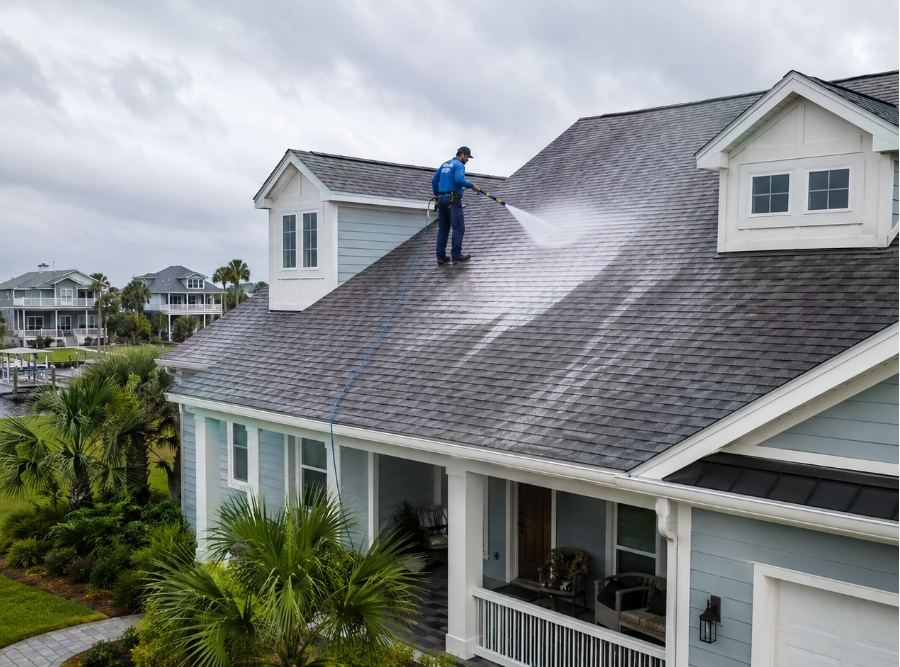
Unlike high-pressure washing, which can strip protective granules from shingles, soft washing relies on low-pressure application methods and specialized cleaning solutions designed to safely remove algae, mildew, moss, and organic buildup without damaging the roofing materials underneath.
A professional roof cleaning can dramatically improve curb appeal while also helping slow future biological growth.
One thing we notice often in humid coastal areas is that algae tends to spread fastest on north-facing slopes and shaded roof sections where moisture lingers longer after storms. Those areas dry more slowly, which gives algae and moss the perfect environment to grow and spread across the shingles.
We also see homeowners surprised by how much younger a roof looks after cleaning.
Sometimes a roof that appeared ready for replacement from the street turns out to have years of service life remaining once the staining is removed and the shingles are properly evaluated underneath.
When Roof Cleaning Is Usually the Right Solution
Roof cleaning is usually the right solution when the issues are cosmetic rather than structural. If the shingles are still lying flat, retaining granules properly, and functioning as intended, soft washing can restore the roof’s appearance while helping prevent long-term moisture retention and organic buildup from accelerating deterioration.
A healthy roof that simply has algae staining often still has:
- intact shingle edges
- strong granule coverage
- proper drainage
- stable decking underneath
- no signs of moisture intrusion inside the home
That distinction is important because algae growth and roof failure are not the same thing. A roof may look dirty years before it actually reaches the end of its lifespan. Cleaning also plays an important preventative role.
Organic buildup traps moisture against the roofing surface, especially beneath tree cover or in shaded sections that stay damp after rain. Over time, that trapped moisture contributes to premature aging by increasing thermal stress, accelerating granule wear, and keeping roofing materials wet longer than they were designed to be.
In coastal climates where humidity is already constant, preventative maintenance matters even more. We often tell homeowners that roof cleaning works best when it is proactive, not reactive. Maintenance buys time. Structural deterioration changes the conversation.
Signs It May Be Too Late for Cleaning Alone
There comes a point where cleaning no longer addresses the actual problem.
If shingles are curling, cracking, becoming brittle, or shedding heavy amounts of granules, the roof may already be entering the later stages of its lifespan. Cleaning might improve appearance temporarily, but it will not restore structural integrity to aging roofing materials.
One of the biggest warning signs we look for is excessive granule loss.
Those granules protect the asphalt beneath from ultraviolet exposure and long-term weather deterioration. Once shingles begin losing that protective layer heavily, the asphalt underneath starts drying out, overheating, and weakening much faster. That is when roofs often begin aging rapidly.
Soft or spongy roof decking is another serious concern. If sections of the roof feel uneven or unstable beneath the shingles, moisture may already be affecting the wood decking underneath the roofing system. At that point, the issue extends beyond surface cleaning and often involves hidden structural deterioration beneath the shingles themselves.
Leaks are another major indicator that the roof needs more than maintenance. Water stains in the attic, recurring ceiling discoloration, sagging areas, or signs of moisture intrusion usually point to roofing-system failure rather than cosmetic staining alone.
Contractors across storm-prone and humid regions see this situation regularly. According to the team at Red Rover Roofing in Tennessee, homeowners often mistake visible staining for the biggest problem when the more serious issue is actually the condition of the shingles underneath.
“We often inspect roofs that homeowners thought only needed cleaning, but once we get up there, we find brittle shingles, exposed matting, failing seal strips, and moisture beginning to affect the decking underneath,” the company explains. “Cleaning can absolutely help preserve a healthy roof, but once the roofing system starts breaking down structurally, maintenance alone will not stop that deterioration.”
That delayed realization is common on older asphalt roofs where years of heat, UV exposure, humidity, and weather cycles have already weakened the shingles before visible problems become obvious from the ground.
Knowing the Difference Protects Your Investment
Not every stained roof needs replacement.
In many cases, professional soft washing can safely restore the appearance of asphalt shingles and help extend the life of the roofing system. But when visible staining is combined with curling shingles, granule loss, leaks, or soft decking, the issue is no longer cosmetic.
That is when homeowners should have the roof evaluated by an experienced roofing contractor who can determine whether the system is still serviceable or approaching the point where replacement becomes the safer long-term investment.
Most roofing problems develop gradually before they become visible.
The earlier homeowners understand the difference between a roof that needs cleaning and a roof that needs replacement, the better chance they have of protecting both the structure of the home and the lifespan of the roofing system itself.